
In my last post, I wrote about what Dr. John Upledger meant by Inner Wisdom. He often called it the Inner Physician, and he believed you could actually talk with it. This post is about that conversation.
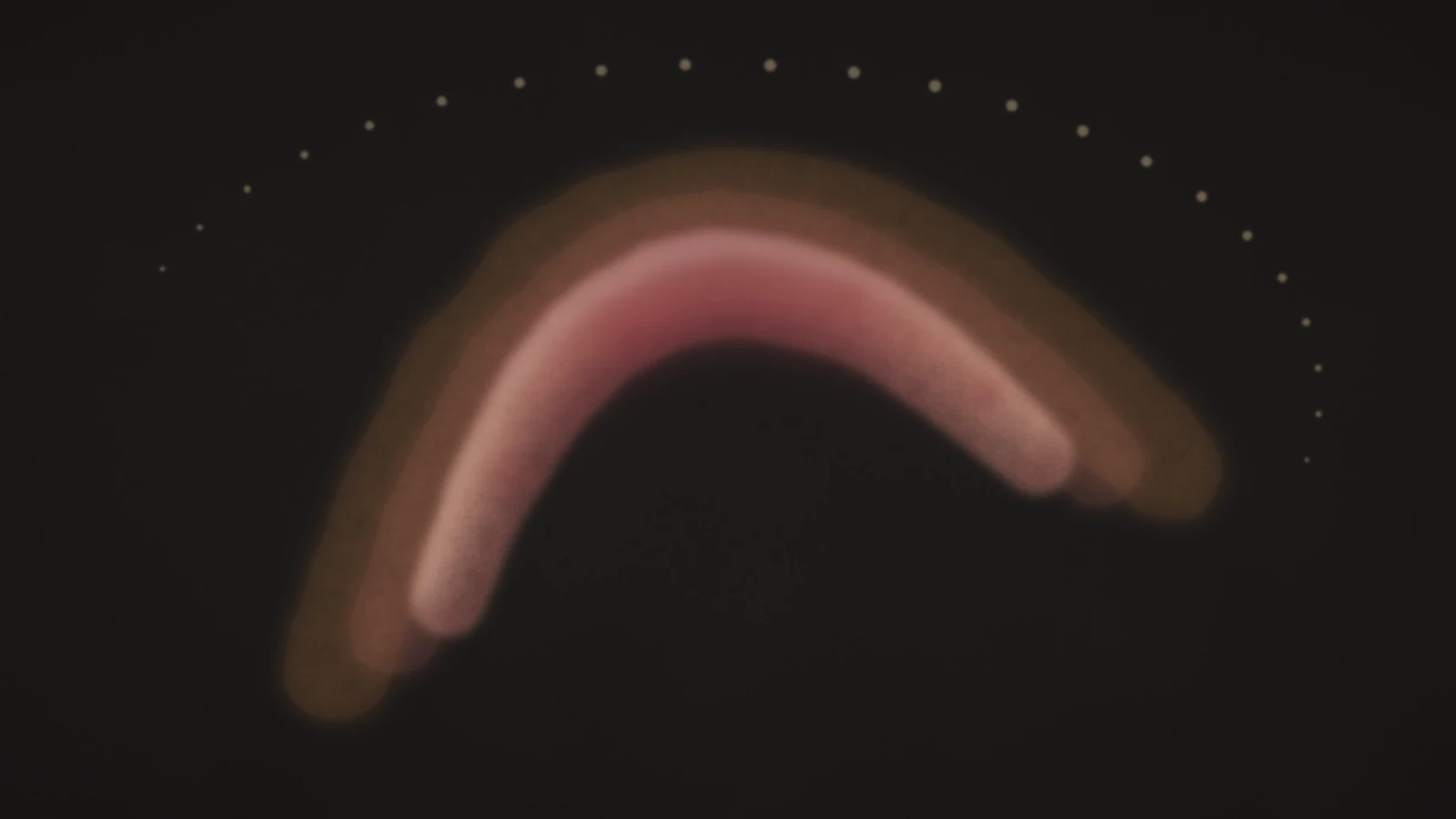
A red boomerang
Dr. Upledger learned this firsthand. At a seminar on guided imagery, he volunteered to be the demonstration subject. He had had pain across his low back, off and on, since he was 14.
The teacher asked him to look inside his back and find an image of the pain. One came right away. The pain was red and shaped like a boomerang. When he asked the boomerang to tell him more about itself, it began to inflate like a beach toy, and his back hurt more. He asked what was filling it. One word came to mind: anger.
His back pain had started soon after his father died, and he was angry about that loss. He came to see anger as a boomerang: when you’re angry, it comes back at you. Once he learned that back pain meant he was angry, whether he knew it or not, he could sit somewhere quiet and find out what about. His back hurt much less often after that. In his words, “I think my back pain is a message from my Inner Physician” (Your Inner Physician and You, pp. 115–116).
How the conversation works
Dr. Upledger brought this into his CranioSacral Therapy sessions. He called it Therapeutic Imagery and Dialogue. Most of his clients went into deep relaxation during a session. In that relaxed state, he would invite the Inner Physician to come and talk.
He asked the client to let an image of the Inner Physician form, and to learn the name it wanted to be called. He built a friendly rapport and made clear that his intentions were honest and sincere. Only then did he ask questions about the issue at hand. The Inner Physician could appear in any form it chose. He compared Inner Physicians to magicians (pp. 117–119).
His hands kept listening the whole time. When something important came up, he felt the craniosacral rhythm stop. He called this the Significance Detector (p. 117). I first learned it in the CranioSacral Therapy 2 course.
He was clear that this is not an interrogation. He described “a friendly conversational approach that offers a listening ear” (Subtle Energies, p. 156).
In the SomatoEmotional Release 2 course, Dr. Upledger taught that this dialogue doesn’t always need words. Sometimes he spoke with a client through his touch alone, and he told therapists not to force it.
Talking with your own
Dr. Upledger didn’t keep this for the treatment room. In his ShareCare classes, he taught people a few simple CranioSacral Therapy techniques to use on friends and family, and introduced them to their own Inner Physician. He hoped people would talk with theirs every day. Yes, he admitted, you’d be talking to yourself, but you’d get to know yourself better. He also said that pain which keeps coming back calls for a diagnosis from a physician (pp. 128–129).
Here’s how I see it
Most of my conversation with your body happens through my hands, without words. I wrote about that in my last post. But I do use spoken dialogue, only when it’s needed.
Sometimes the tissue under my hands feels stuck. And sometimes I can tell you’re no longer here in the room with me. You’re in the middle of a memory. That’s when I’ll talk with you.
I’m not telling you what to do. I ask questions about what you’re noticing. The questions gently bring you back to the present moment.
I don’t have a script. What I ask depends on what you’re experiencing right then.
When I feel the tissue start moving again, the talking usually stops. Your energy is moving again, so the words aren’t needed anymore.
Here’s what I think is happening, in 4 Bodies terms. When you drift into a memory, your Spiritual Body has left the present moment. If that memory carries an emotional charge, your Emotional Body ties that charge to the place your Spiritual Body went. Together, they show up in your Physical Body. That’s the tissue I feel stop moving under my hands.
Dr. Upledger’s boomerang shows the same thing. His anger lived in his Emotional Body, and it showed up as pain in his Physical Body.
A good conversation also has an ending. Think of a long lunch with a friend. At some point, there’s nothing more to say. If you keep talking because you don’t want to leave, the talk starts to take effort. Bodies are the same. If I push the dialogue past that point, it becomes too much. Part of my job is noticing when to stop talking.
If you’d like to practice listening inward on your own, the meditation tools I teach at 4QBoundaries.com are a good place to start.
Next, I’ll write about SomatoEmotional Release, the part of Dr. Upledger’s work that goes hand in hand with this dialogue.
Sources
- John E. Upledger, “CranioSacral Therapy Part II: As It Is Today,” Subtle Energies 6, no. 2 (1995): 156.
- John E. Upledger, Your Inner Physician and You: CranioSacral Therapy and SomatoEmotional Release, 2nd ed. (Berkeley, CA: North Atlantic Books, 1997), 115–119, 128–129.